Efficacy of adjuvants in herbicides for weed management in lime crop
DOI:
https://doi.org/10.29059/rmic.v1i1.7Keywords:
Effectiveness, herbicide, enhancersAbstract
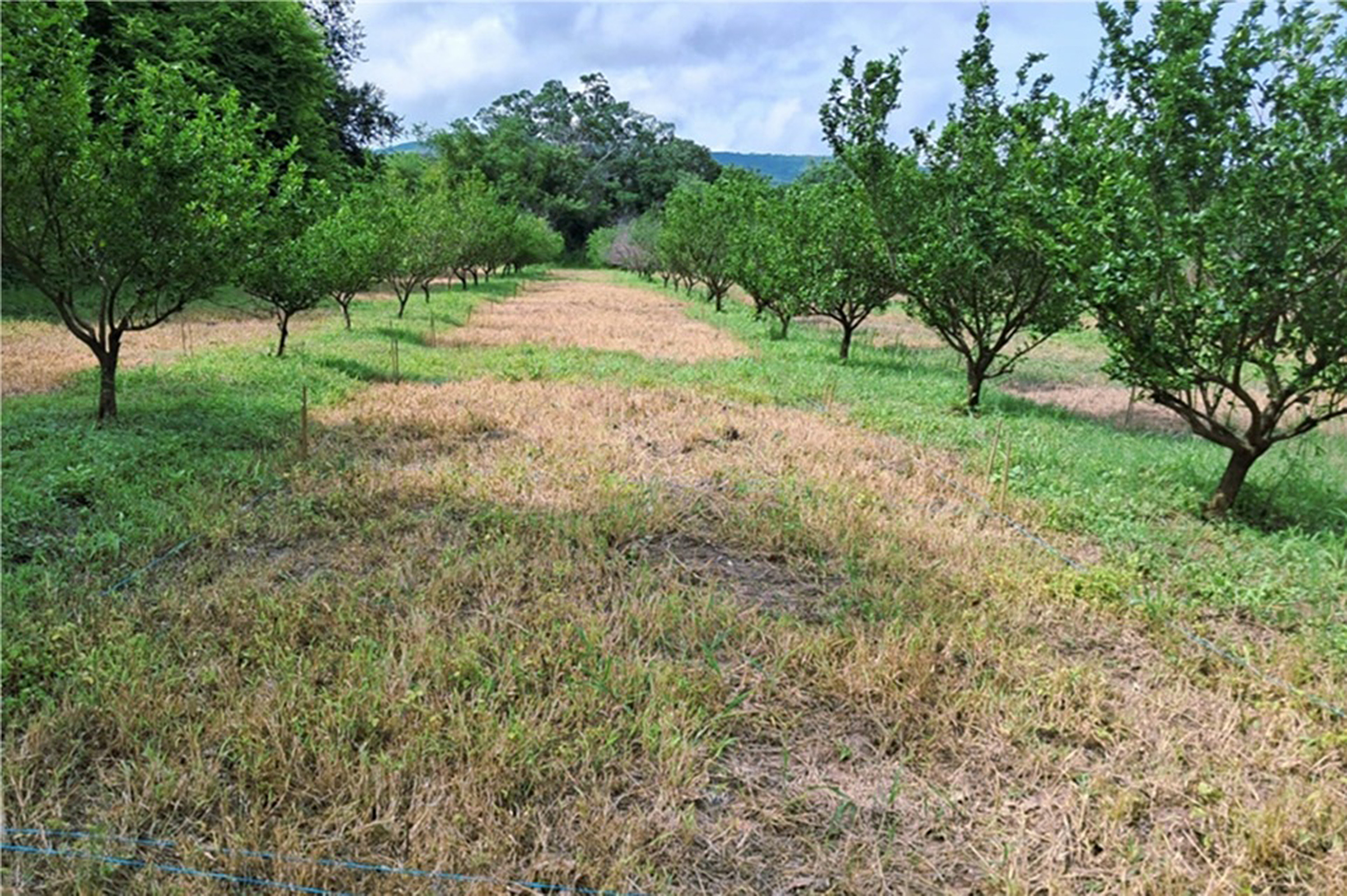
The appropriate use of adjuvants tends to improve herbicide efficacy; however, in some cases, the adjuvant can have an antagonistic effect. The objective of this research was to evaluate different adjuvants as herbicide enhancers for weed control in lemon cultivation. The research was conducted in August 2024 in a plot established at
INIFAP-CEIGUA. The experimental design included the evaluation of weeds with a height between 10 cm and 20 cm. In total, 30 different treatments were applied with four replicates. The experimental unit measured 4 × 5 m. The experimental design was a randomised complete block design. The main weeds were Johnson grass and star grass. The established scale proposed by the EWRS was used to measure the effectiveness and impact of the treatments on the weeds. The results were evaluated as percentages, and an analysis of variance and a mean comparison test (Tukey, α = 0.05) were performed using SAS version 9.4. The herbicides that stood out in this study were those made from a mixture of surfactants, organic and inorganic acidifiers, fulvic acids, potentiators, diluents, and related elements, as well as those formulated with vegetable oil and polyalkylene oxide siloxane. The treatments that showed the greatest weed control effect when using the 50% dose plus the herbicides were those using glyphosate, glufosinate ammonium, and the bioherbicides BH2, BH3, and BH2 + BH3.
References
Abbas, N., Tanveer, A., Ahmad, T., & Amin, M. (2018). Use of adjuvants to optimize the activity of two broad-spectrum herbicides for weed control in wheat. Planta Daninha, 36, e018174762.
Abouziena, H.F., & Haggag, W.M. (2016). Weed control in clean agriculture: A review. Planta Daninha, 34, 377–392.https://doi.org/10.1590/S0100-83582016340200019
Arispe-Vázquez, J.L., Cadena-Zamudio, D.A., Tamayo-Esquer, L.M., Noriega-Cantú, D.H., Toledo-Aguilar, R., Felipe-Victoriano, M., Barrón-Bravo, O.G., Reveles-Hernández, M., Ramírez-Sánchez, S.E., & Espinoza-Ahumada, C.A. (2023). A review of the current panorama of glyphosate resistance among weeds in Mexico and the rest of the world. Agroproductividad, 16, 135–149. https://doi.org/10.32854/agrop.v16i7.261
Arispe-Vázquez, J.L., Noriega-Cantú, D.H., Toledo-Aguilar, R., & Flores-Hernández, L.A. (2024). The impact of polydimethylsiloxane as a herbicide adjuvant for weed control in the lime Citrus × aurantifolia (Christm.) Swingle plot. Journal of Agricultural Science, 16(11), 22–33. https://doi.org/10.5539/jas.v16n11p22
Bell, J. M., Dotray, P., & Grichar, J. (2019). Adjuvants: Why are adjuvants important and what is the difference between adjuvants? Texas Row Crops Newsletter, Texas A&M AgriLife Extension Service. Recuperado de https://agrilife.org/texasrowcrops/2019/04/03/why-are-adjuvants-important-and-what-is-the-difference-between-adjuvants/
Campos, M. A., Palma, G., Faundez, C., & Elgueta, S. (2024). The effects of the co-application of MCPA herbicide and urea on grass rhizosphere microcosms. Agronomy, 14(7), 1366. https://doi.org/10.3390/agronomy14071366
Champion, G.T. (2000). Bright and the field scale evaluations herbicides tolerant. GM Trials. AICC Newsletter, December 2000.
Gan, H., Emmett, B.D., & Drinkwater, L.E. (2021). Soil management legacy alters weed–crop competition through biotic and abiotic pathways. Plant and Soil, 462, 543–560. https://doi.org/10.1007/s11104-021-04891-3
Gould, F.W. & Shaw, R.B. (1983). Grass Systematics. Texas A&M University Press.
Hitchcock, A.S. (1971). Manual of the Grasses of the United States. Dover Publications.
Horvath, D.P., Clay, S.A., Swanton, C.J., Anderson, J.V., & Chao, W.S. (2023). Weed-induced crop yield loss: A new paradigm and new challenges. Trends in Plant Science, 28(5), 567–582. https://doi.org/10.1016/j.tplants.2022.12.014
INTAGRI. (2017). Coadyuvantes para potencializar el rendimiento de plaguicidas. Serie Fitosanidad Núm. 94. Artículos Técnicos de INTAGRI. México. 8 p.
Kubiak, A., Wolna-Maruwka, A., Niewiadomska, A., & Pilarska, A.A. (2022). The problem of weed infestation of agricultural plantations vs. the assumptions of the European Biodiversity Strategy. Agronomy, 12, 1808. https://doi.org/10.3390/agronomy12081808
Legleiter, T., Butts, T., Essman, A., Ikley, J., Lancaster, S., & Werle, R. (2024). Adjuvants with herbicides: When and why they are needed. Crop Protection Network, CPN-4011. https://doi.org/10.31274/cpn-20240520-0
McMullan, P. M. (2000). Utility adjuvants. Weed Technology, 14(4), 792–797. https://doi.org/10.1614/0890-037X(2000)014[0792:UA]2.0.CO;2
Parven, A., Meftaul, I.M., Venkateswarlu, K., & Megharaj, M. (2024). Herbicides in modern sustainable agriculture: Environmental fate, ecological implications, and human health concerns. International Journal of Environmental Science and Technology. https://doi.org/10.1007/s13762-024-05818-y
Reddy, C. (2018). A study on crop weed competition in field crops. Journal of Pharmacognosy and Phytochemistry, 7, 3235–3240.
SAS Institute. (2012). SAS/STAT User’s Guide: Software Version 9.4. Statistical Analysis System Institute. Cary, North Carolina, USA.
Zimdahl, R.L. (2007). Competencia entre malezas y cultivos: una reseña. Hoboken, NJ: John Wiley and Sons.
Downloads
Published
How to Cite
Issue
Section
License
Copyright (c) 2025 Revista Mexicana de Ingeniería y Ciencias

This work is licensed under a Creative Commons Attribution-NonCommercial 4.0 International License.