Eficacia de adyuvantes en herbicidas para el manejo de arvenses en cultivo de limón
DOI:
https://doi.org/10.29059/rmic.v1i1.7Palabras clave:
Efectividad, herbicida, potencializadoresResumen
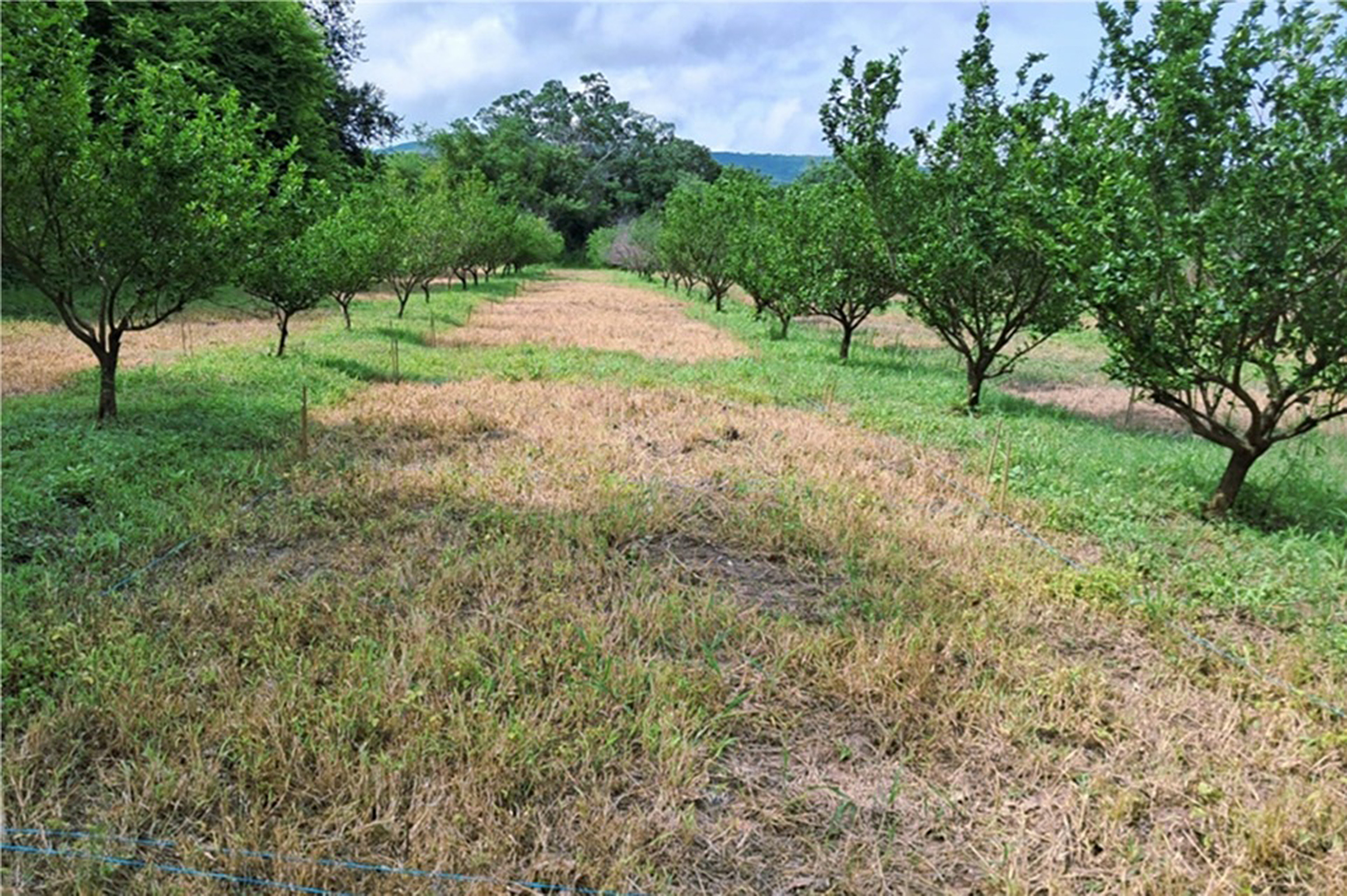
El uso adecuado de adyuvantes suele mejorar la eficacia de los herbicidas; sin embargo, en algunos casos pueden generar efectos antagónicos. El objetivo de esta investigación fue evaluar diferentes adyuvantes como potencializadores de herbicidas y bioherbicidas para el control de arvenses en el cultivo de limón. El estudio se realizó en agosto de 2024 en una parcela establecida en el INIFAP-CEIGUA. Las arvenses presentes en la parcela fueron Sorghum halepense y Cynodon dactylon con alturas entre 10 y 20 cm y se aplicaron un total de 30 tratamientos con cuatro repeticiones, en unidades experimentales de 4 × 5 m, bajo un diseño de bloques al azar. Los tratamientos incluyeron la aplicación de los bioherbicidas BH2, BH3, BH2 + BH3, herbicidas sintéticos, tales como: glufosinato de amonio, paraquat, glifosato a dosis del 100% (sin adyuvante) y dosis al 50% más un adyuvante, además de un testigo sin aplicación. Las principales arvenses presentes fueron zacate Johnson y zacate estrella. La eficacia se determinó mediante la escala de la EWRS y se analizaron los datos con ANOVA y la prueba de Tukey (α = 0.05) utilizando SAS 9.4. Los adyuvantes que mostraron mayor potencial correspondieron a formulaciones basadas en mezclas de tensoactivos, acidificantes orgánicos e inorgánicos, ácidos fúlvicos, diluyentes, coadyuvantes y compuestos afines, así como formulaciones con aceite vegetal y siloxano óxido de polialquileno. Los tratamientos que presentaron mejores niveles de control al usar la dosis al 50% + adyuvante fueron glifosato, glufosinato de amonio, y los bioherbicidas BH2, BH3 y BH2 + BH3
Citas
Abbas, N., Tanveer, A., Ahmad, T., & Amin, M. (2018). Use of adjuvants to optimize the activity of two broad-spectrum herbicides for weed control in wheat. Planta Daninha, 36, e018174762.
Abouziena, H.F., & Haggag, W.M. (2016). Weed control in clean agriculture: A review. Planta Daninha, 34, 377–392.https://doi.org/10.1590/S0100-83582016340200019
Arispe-Vázquez, J.L., Cadena-Zamudio, D.A., Tamayo-Esquer, L.M., Noriega-Cantú, D.H., Toledo-Aguilar, R., Felipe-Victoriano, M., Barrón-Bravo, O.G., Reveles-Hernández, M., Ramírez-Sánchez, S.E., & Espinoza-Ahumada, C.A. (2023). A review of the current panorama of glyphosate resistance among weeds in Mexico and the rest of the world. Agroproductividad, 16, 135–149. https://doi.org/10.32854/agrop.v16i7.261
Arispe-Vázquez, J.L., Noriega-Cantú, D.H., Toledo-Aguilar, R., & Flores-Hernández, L.A. (2024). The impact of polydimethylsiloxane as a herbicide adjuvant for weed control in the lime Citrus × aurantifolia (Christm.) Swingle plot. Journal of Agricultural Science, 16(11), 22–33. https://doi.org/10.5539/jas.v16n11p22
Bell, J. M., Dotray, P., & Grichar, J. (2019). Adjuvants: Why are adjuvants important and what is the difference between adjuvants? Texas Row Crops Newsletter, Texas A&M AgriLife Extension Service. Recuperado de https://agrilife.org/texasrowcrops/2019/04/03/why-are-adjuvants-important-and-what-is-the-difference-between-adjuvants/
Campos, M. A., Palma, G., Faundez, C., & Elgueta, S. (2024). The effects of the co-application of MCPA herbicide and urea on grass rhizosphere microcosms. Agronomy, 14(7), 1366. https://doi.org/10.3390/agronomy14071366
Champion, G.T. (2000). Bright and the field scale evaluations herbicides tolerant. GM Trials. AICC Newsletter, December 2000.
Gan, H., Emmett, B.D., & Drinkwater, L.E. (2021). Soil management legacy alters weed–crop competition through biotic and abiotic pathways. Plant and Soil, 462, 543–560. https://doi.org/10.1007/s11104-021-04891-3
Gould, F.W. & Shaw, R.B. (1983). Grass Systematics. Texas A&M University Press.
Hitchcock, A.S. (1971). Manual of the Grasses of the United States. Dover Publications.
Horvath, D.P., Clay, S.A., Swanton, C.J., Anderson, J.V., & Chao, W.S. (2023). Weed-induced crop yield loss: A new paradigm and new challenges. Trends in Plant Science, 28(5), 567–582. https://doi.org/10.1016/j.tplants.2022.12.014
INTAGRI. (2017). Coadyuvantes para potencializar el rendimiento de plaguicidas. Serie Fitosanidad Núm. 94. Artículos Técnicos de INTAGRI. México. 8 p.
Kubiak, A., Wolna-Maruwka, A., Niewiadomska, A., & Pilarska, A.A. (2022). The problem of weed infestation of agricultural plantations vs. the assumptions of the European Biodiversity Strategy. Agronomy, 12, 1808. https://doi.org/10.3390/agronomy12081808
Legleiter, T., Butts, T., Essman, A., Ikley, J., Lancaster, S., & Werle, R. (2024). Adjuvants with herbicides: When and why they are needed. Crop Protection Network, CPN-4011. https://doi.org/10.31274/cpn-20240520-0
McMullan, P. M. (2000). Utility adjuvants. Weed Technology, 14(4), 792–797. https://doi.org/10.1614/0890-037X(2000)014[0792:UA]2.0.CO;2
Parven, A., Meftaul, I.M., Venkateswarlu, K., & Megharaj, M. (2024). Herbicides in modern sustainable agriculture: Environmental fate, ecological implications, and human health concerns. International Journal of Environmental Science and Technology. https://doi.org/10.1007/s13762-024-05818-y
Reddy, C. (2018). A study on crop weed competition in field crops. Journal of Pharmacognosy and Phytochemistry, 7, 3235–3240.
SAS Institute. (2012). SAS/STAT User’s Guide: Software Version 9.4. Statistical Analysis System Institute. Cary, North Carolina, USA.
Zimdahl, R.L. (2007). Competencia entre malezas y cultivos: una reseña. Hoboken, NJ: John Wiley and Sons.
Descargas
Publicado
Cómo citar
Número
Sección
Licencia
Derechos de autor 2025 Revista Mexicana de Ingeniería y Ciencias

Esta obra está bajo una licencia internacional Creative Commons Atribución-NoComercial 4.0.