Comportamiento de residuos de eventos genéticamente modificados durante el procesamiento de alimentos tradicionales mexicanos de maíz
DOI:
https://doi.org/10.29059/rmic.v1i1.1Palabras clave:
Cry1Ab, frituras, pinole, atole, tamal, tortillaResumen
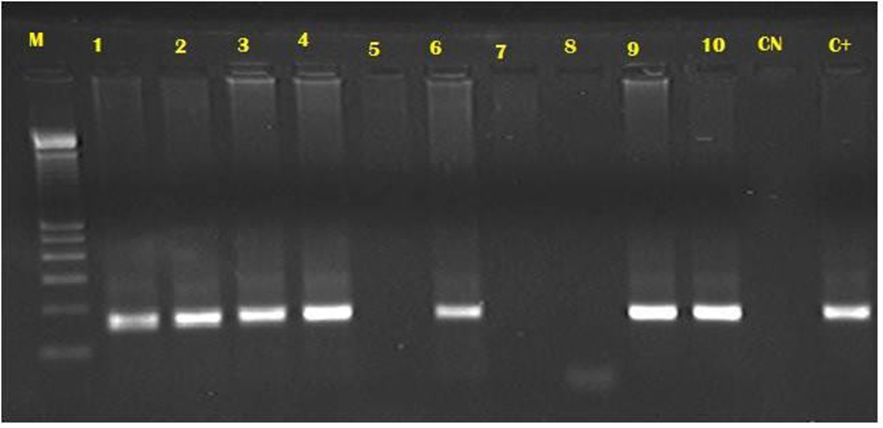
México es centro de origen y diversidad del maíz nativo, su cultivo es debido a que es uno de los principales ingredientes de la dieta de su población, la llegada del maíz transgénico amenaza la soberanía alimentaria ya que el problema con los transgénicos en México no es únicamente por el uso en la alimentación, si no, por el riesgo de contaminación de maíces nativos. Aunque en México no se cultiva comercialmente el maíz transgénico, su presencia es controversial. El presente estudio se llevó a cabo para evaluar la persistencia de segmentos de ADN transgénico durante y después de alguna etapa crítica en el procesamiento de alimentos tradicionales como pinole, tamal, tortilla, frituras y atole. Estos alimentos fueron elaborados con maíz transgénico, y durante su elaboración se identificaron condiciones críticas como cambios de temperatura o pH en todo el proceso. De estas etapas se extrajo, purifico y amplifico ADN con iniciadores específicos a los eventos transgénicos Cry1Ab y CaMV 35S para determinar su persistencia después de pasar por condiciones altamente críticas. Como resultado se detectó por PCR segmentos de eventos transgénicos en alimentos tradicionales en las diferentes condiciones críticas. Se amplificó una banda de 184 pares de bases correspondientes al gen Cry1Ab en algunos de estos alimentos. Se concluye que las condiciones críticas de temperatura y pH durante el procesamiento de los alimentos tradicionales no afectan las secuencias de ADN transgénico, es decir su persistencia se mantiene.
Citas
Abbas, M.S.T. (2018). Genetically engineered (modified) crops (Bacillus thuringiensis crops) and the world controversy on their safety. Egypt J Biol Pest Control 28(52): 1-12. https://doi.org/10.1186/s41938-018-0051-2.
Amack, S. &Antunes, M. (2020). CaMV35S promoter – A plant biology and biotechnol-ogy workhorse in the era of synthetic biology. Current Plant Biology, 24 (80):100179. 10.1016/j.cpb.2020.100179
Areal, F.J. & Riesgo, L. (2021). EU Inspections of GM Content in Food and Feed: Are They Effective? Agriculture 11(9): 842. https://doi.org/10.3390/agriculture11090842
Bogani, P., Minunni, M., Spiriti, M., Zavaglia, M., Tombelli, S., Buiatti, M. & Mascini, M. (2009). Transgenes monitoring in an industrial soybean processing chain by DNA-based conventional approaches and biosensors. Food Chemistry 113: 658-664. https://doi.org/10.1016/j.foodchem.2008.07.056
Bowen, D., Yin, Y., Flasinski, S., Chay, C., Bean, G., Milligan, J., Moar, W., Pan, A., Werner, B., Buckman, K., Howe, A., Ciche, T., Turner, K., Pleau, M., Zhang, J., Kouadio, J.L., Hibbard, B.E., Price, P. & Roberts, J. (2021). Cry75Aa (Mpp75Aa) Insecticidal Proteins for Controlling the Western Corn Rootworm, Diabrotica vir-gifera virgifera, (Coleoptera: Chrysomelidae), Isolated from the Insect Pathogenic Bacteria Brevibacillus laterosporus. Appl Environ Microbiol 87(4): e02507-20. https://doi.org/10.1128/AEM.02507-20.
Brookes, G. (2022). GM crops: global socio-economic and environmental impacts 1996-2020. PG Economiscs Ltd, UK. https://www.pgeconomics.co.uk/.
Campeden B.R.I. (2021). Comparing international approaches to food safety regulation of GM and Novel Foods. Food Standards Agency. https://doi.org/10.46756/sci.fsa.rdg239
Cappellini, E., Prohaska, A., Racimo, F., Welker, F., & Pedersen. M. W. (2018). Allen-toft ME and Willerslev E, Ancient Biomolecules and Evolutionary Inference. An-nual Review of Biochemistry 87: 1029-1060. https://doi.org/10.1146/annurev-biochem-062917-01200
Caradus, J.R. (2022). Intended and unintended consequences of genetically modified crops – myth, fact and/or manageable outcomes? New Zealand Journal of Agri-cultural Research, https://doi.org/10.1080/00288233.2022.2141273
Chiaravutthi, Y. & Pongjit, C. (2022). Thai Consumer Willingness to Pay for Differing GM Labeling Policies: Comparisons across Time. Thailand and The World Econ-omy 40(3): 69-86. Retrieved from https://so05.tci-thaijo.org/index.php/TER/article/view/261140
Chowdhury, E.H., Kuribara, H., Hino, A., Sultana, P., Mikami, O., Shimada, N., Guruge, K. S., Saito, M., & Nakajima, Y. (2003). Detection of corn intrinsic and recombinant DNA fragments and Cry1Ab protein in the gastrointestinal contents of pigs fed genetically modified corn Bt11. Journal of Animal Science 81:2546-2551. https://doi.org/10.2527/2003.81102546x
Deckers, M., Deforce, D., Fraiture, M.A., & Roosens, N.H.C. (2020). Genetically Modified Micro-Organisms for Industrial Food Enzyme Production: An Overview. Foods 9(3): 326. doi: 10.3390/foods9030326
Galeana, E. 2023. Grain Production Fell in January 2023; Imports Rose. Mexico busi-ness News. https://mexicobusiness.news/
García R.M.T., Knapp, A.N., & Garcia-Ruiz, H. (2018). Profile of genetically modified plants authorized in Mexico. GM Crops Food 9(3): 152-168. https://doi.org/10.1080/21645698.2018.1507601.
Giraldo, P.A., Shinozuka, H., Spangenberg, G.C., Cogan, N.O.I., & Smith, K.S. (2019). Safety Assessment of Genetically Modified Feed: Is There Any Difference From Food?. Front. Plant Sci 10:1-17. https://doi.org/10.3389/fpls.2019.01592
González-Morales, S., Cruz-Requena, M., Rodríguez-Vidal, A., Aguilar-González, C. N., Rebolloso-Padilla, O., & Rodríguez-Herrera, R. (2015). Persistence of transgenic genes and proteins during soybean food processing. Food Bioscience 11:43-47. https://doi.org/10.1016/j.fbio.2015.04.002
González-Ortega, E., Piñeyro-Nelson, A., Gómez-Hernández, E., Monterrubio-Vázquez, E., Arleo, M., Dávila-Velderrain, J., Martínez-Debat C., & Álvarez-Buylla, E.R. (2017). Pervasive presence of transgenes and glyphosate in maize-derived food in Mexico, Agroecology and Sustainable Food Systems, https://doi.org /10.1080/21683565.2017.1372841To link to this article: http://dx.doi.org/10.1080/21683565.2017.
Graham, G. C., Mayers, P., & Henry, R. J. (1994). Simplified method for the preparation of fungal genomic DNA for PCR and RAPD analysis. BioTechniques 16:48-50. https://pubmed.ncbi.nlm.nih.gov/8136138/
Hanlon, P., & Sewalt, V. (2021). GEMs: genetically engineered microorganisms and the regulatory oversight of their uses in modern food production. Critical Reviews in Food Science and Nutrition 61(6):959-970, https://doi.org/10.1080/10408398.2020.1749026
Holst-Jensen, A., Bertheau, Y., de Loose, M., Grohmann, L., Hamels, S., Hougs, L., Morisset, D., Pecoraro, S., Pla, M., Van den Bulcke, M., & Wulff, D. (2012). Detect-ing un-authorized genetically modified organisms GMOs and derived materials. Biotechnology Advances 306:1318- 1335. https://doi.org/10.1016/j.biotechadv.2012.01.024
ISAAA, (2019). Global status of commercialized biotech/GM crops in 2019: Biotech crops drive SocioEconomic development and sustainable environment in the new frontier, Vols. 3–13, ISAAA, Ithaca, NY (2019). https://www.isaaa.org/resources/publications/briefs/55/executivesummary/pdf/B55-ExecSum-English.pdf
Jagielski, T., Gawor, J., Bakuła, Z., Zuchniewicz, K., Żak, I., & Gromadka, R. (2017). An optimized method for high quality DNA extraction from microalga Prototheca wickerhamii for genome sequencing. Plant methods 13:77. https://doi.org/10.1186/s13007-017-0228-9. eCollection 2017.
Khorramnejad, A., Domínguez-Arrizabalaga, M., Caballero, P., Escriche, B., & Bel, Y (2020). Study of the Bacillus thuringiensis Cry1Ia Protein Oligomerization Pro-moted by Midgut Brush Border Membrane Vesicles of Lepidopteran and Coleop-teran Insects, or Cultured Insect Cells. Toxins (Basel) 12(2):133. doi: 10.3390/toxins12020133. PMID: 32098045; PMCID: PMC7076784.
Kuwar, S.S., Mishra, R., Banerjee, R., Milligan, J., Rydel, T., Du, Z., Xie, Z., Ivashuta, S., Kouadio, J.L., Meyer, J.M., & Bonning, B.C. (2022). Engineering of Cry3Bb1 pro-vides mechanistic insights toward countering western corn rootworm resistance. Curr Res Insect Sci. 2:100033. https://doi.org/10.1016/j.cris.2022.100033.
Lee, T.H., Ho, H.K., & Leung, T.F. (2017). Genetically modified foods and allergy. Hong Kong Med J 23(3): 291-5. https://doi.org/10.12809/hkmj166189.
Lobato-Gómez, M., Hewitt, S., Capell, T., Christou, P., Dhingra, A., & Girón-Calva, P.S. (2021). Transgenic and genome-edited fruits: background, constraints, benefits, and commercial opportunities. Hortic Res 8:166. https://doi.org/10.1038/s41438-021-00601-3
Lopera-Barrero, N. M., Povh, J. Á., Ribeiro, R. P., Gómes, P. C., Jacometo, C. B., & Da-Silva–Lópes, T. (2008). Comparison of DNA extraction protocols of fish fin and larvae samples: modified salt NaCl extraction. Ciencia e Investigación Agraria 35: 65-74. https://www.researchgate.net/publication/299079146_Comparison_of_DNA_extraction_protocols_of_fish_fin_and_larvae_samples_Modified_salt_NaCl_extraction
Lu, M., Jin, Y., Ballmer-Weber, B., & Goodman, R.E. (2018). A comparative study of human IgE binding to proteins of a genetically modified (GM) soybean and six non-GM soybeans grown in multiple locations. Food Chem Toxicol 112:216-223. https://doi.org/10.1016/j.fct.2018.01.001.
Mandaci, M., Çakir, O., Turgut-Kara, N., Meriç, S., & Şule, A. (2014). Detection of genet-ically modified organisms in soy products sold in Turkish market. Food Science and Technology 344:717-722. http://dx.doi.org/10.1590/1678-457X.6441
McDonald, J., Burns, A., & Raybould, A. (2020). Advancing ecological risk assess-ment on genetically engineered breeding stacks with combined insect-resistance traits. Transgenic Res 29: 135–148. https://doi.org/10.1007/s11248-019-00185-8.
Mostafa, A.A., Abu-Hussein, A.E.H.G., & ElRouby, M.T. (2022). Food adulteration with genetically modified soybeans and maize, meat of animal species and ractopa-mine residues in different food products. Electron J Biotechnol 55. https://doi.org/10.1016/j.ejbt.2021.11.005
Nandula, V.K. (2019). Herbicide Resistance Traits in Maize and Soybean: Current Sta-tus and Future Outlook. Plants (Basel). 8(9): 337. https://doi.org/10.3390/plants8090337
Nikolić, Z., Petrović, G., Panković, D., Ignjatov, M., Marinković, D., Stojanović, M., & Đorđević, V. (2017). Threshold Level and Traceability of Roundup Ready® Soy-beans in Tofu Production. Food technology and Biotechnology 554: 439-444. https://doi.org/10.17113/ftb.55.04.17.5192
Phipps, R. E., Deaville, E.R., & Maddison, B. C. (2003). Detection of Transgenic and Endogenous Plant DNA in Rumen Fluid Duodenal Digesta Milk Blood and Feces of Lactating Dairy Cows. Journal of Dairy Science 86:4070-4078. https://doi.org/10.3168/jds.S0022-0302(03)74019-3
Rott, M., Lawrence, T., Wall, E., & Green, M. (2004). Detection and Quantification of roundup ready soy in foods by conventional and real-time Polymerase Chain Reaction. Journal of Agricultural and Food Chemistry 52:5223-5232. https://doi.org/10.1021/jf030803g
Sánchez, M.A., & Campos, H. (2021). Coexistence of genetically modified seed produc-tion and organic farming in Chile. GM Crops Food 12(1): 509-519. https://doi.org/10.1080/21645698.2021.20012
Scanlon, M.G., Henrich, A.W., & Whitakera, J.R. (2018). Factors affecting enzyme activ-ity in food processing in: Proteins in Food Processing. Woodhead Publishing Se-ries in Food Science, Technology and Nutrition 337-365. https://doi.org/10.1016/B978-0-08-100722-8.00014-0
Sidstedt, M., Romsos, E.L., Hedell, R., Ansell, R., Steffen, C.R., Vallone, P.M., Rådström, P., & Hedman, J. (2017). Accurate Digital Polymerase Chain Reaction Quantifica-tion of Challenging Samples Applying Inhibitor-Tolerant DNA Polymerases. Ana-lytical Chemistry 893: 1642-1649. https://doi.org/10.1021/acs.analchem.6b03746
Stram, Y., Vilk, A., & Klinger, I. (2000) Detection of residues of genetically modified soybeans in breaded fried turkes cutlets. J. Food Sci. 65:604-606. https://doi.org/10.1111/j.1365-2621.2000.tb16057.x
Tajima, G., Huh, S., Schmidt, N.A., Macdonald, J.C., Fleischmann, T., & Wonnacott, K.M. (2022). Impact of genetically modified organism requirements on gene therapy development in the EU, Japan, and the US. Molecular Therapy - Methods and Clinical Development 26(8): 74-83. https://doi.org/10.1016/j.omtm.2022.05.012
Tengel, C., Schübler, P., Setzke, E., Balles, J., & Sprenger-Haubels, M. (2001). PCR – based detection of genetically modified soybean and maize in raw and highly processed foodstuffs. BioTechniques, 31:426-429. https://doi.org/10.2144/01312pf01
Turnbull, C., Lillemo, M., & Hvoslef-Eide, T.A.K. (2021). Global Regulation of Genetical-ly Modified Crops Amid the Gene Edited Crop Boom – A Review. Front. Plant Sci. 12: 630396. https://doi.org/10.3389/fpls.2021.630396
Van Eenennaam, A., & Young, A. (2017). Detection of dietary DNA protein and glyphosate in meat milk and eggs. Journal of Animal Science 95:3247-3269. https://doi.org/10.2527/jas.2016.1346
Wang, X., Lim, H.J., & Son, A. (2014). Characterization of denaturation and renaturation of DNA for DNA hybridization. Environmental Analysis Health and Toxicology 29: e2014007. https://doi.org/10.5620/eht.2014.29.e2014007
Webb, T.L., & Hong, E. (2021). GMO Medicines and hospital pharmacy practice: a re-view. Journal of Pharmacy Practice and Researchb 51(3):203-210. https://doi.org/10.1002/jppr.1742
Wong, A.Y.T., & Chan, W.K.A. (2016). Genetically modified foods in China and the United States: A primer of regulation and intellectual property protection. Food Science and Human Wellness 583:124-140. https://doi.org/10.1016/j.fshw.2016.03.002
Zhang, M., Fan, Y., Cao, J., Chen, L., & Chen, C. (2021) Willingness to Pay for En-hanced Mandatory Labelling of Genetically Modified Soybean Oil: Evidence from a Choice Experiment in China. Foods 10(4):736. https://doi.org/10.3390/foods10040736
Descargas
Publicado
Cómo citar
Número
Sección
Licencia
Derechos de autor 2025 Revista Mexicana de Ingeniería y Ciencias

Esta obra está bajo una licencia internacional Creative Commons Atribución-NoComercial 4.0.